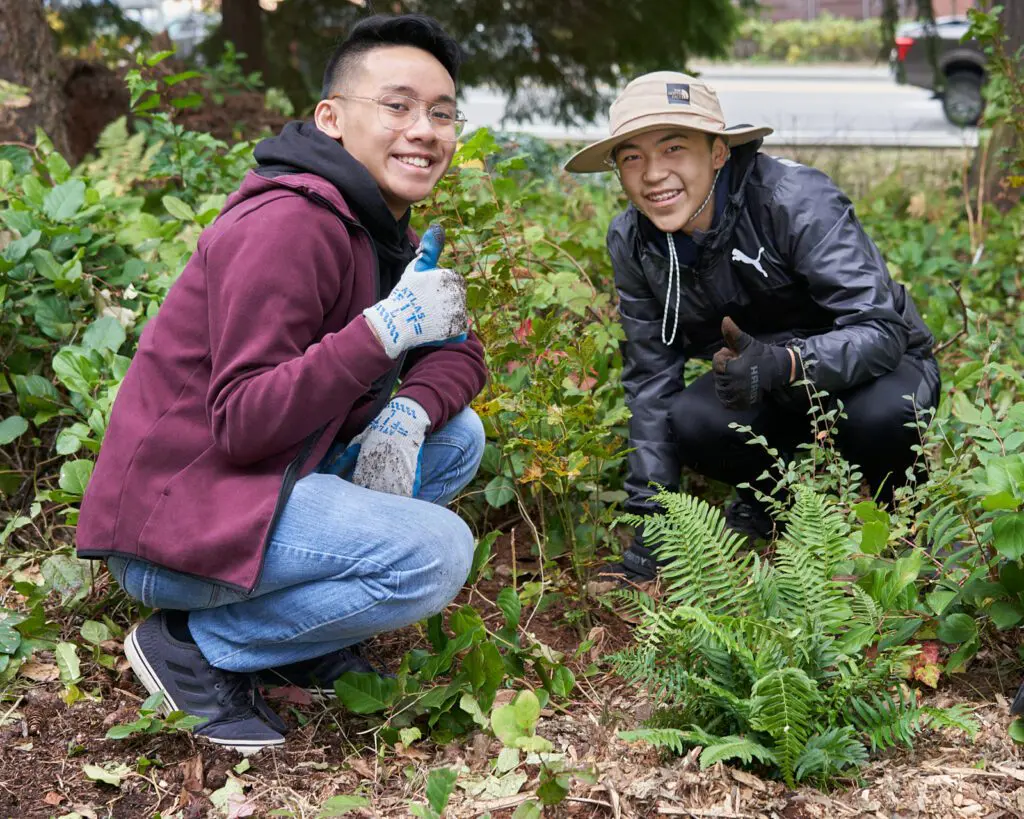
When people hear that Forterra stewards more than 17,000 acres across Washington, it’s easy to picture a sweep of forest and a few quiet trails – nature on autopilot, held in place by good intentions.
But stewardship isn’t passive. It’s not a victory lap after land is protected. It’s the long, ongoing work that keeps a place healthy – month after month, season after season, year after year.
That work falls largely to a dedicated two-person team: Dan Murdoch, Forterra’s Senior Director of Property Management, and Jacob Childers, Project Manager for Real Estate.
When asked about the sheer variety of properties they steward, Dan is quick to clarify, “It’s not just acres of forests and green spaces. Sometimes it’s an easement in the middle of a city block. Each property is so different – you have to reinvent what stewardship means every time you begin caring for a new property.”
“Every property comes with its own set of challenges,” Dan adds.
He offers two vivid examples. The first is a property called Stubbs, in South Prairie Creek – “the final puzzle piece” in the 330-acre South Prairie Creek Preserve. Stubbs falls into the category of a temporary hold, meaning Forterra stewards it for a period before transferring it to another organization. In this case, it will be transferred to Pierce County Conservation District as part of a major floodplain restoration plan.
Whatever the property, the “unexpected” is always part of the work.
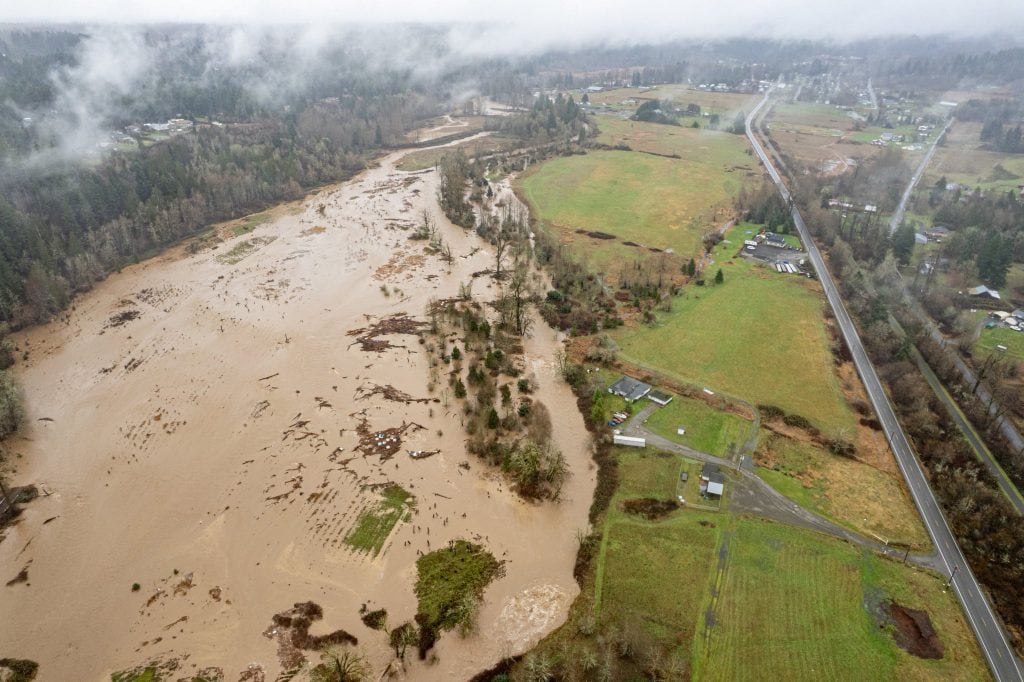
When Forterra took over Stubbs in late December 2021, there was a hoarded home and other large structures on the land. All of it had to be removed due to the toxic threat to the watershed, which meant securing grant funding to cover the removal work. Last year, they faced another curveball when an entire encampment formed on the property, including three or four gigantic RVs. Dan involved the local sheriff and, through skillful negotiation, ensured the vehicles were moved off the property by their owners and avoiding the huge expense of towing.
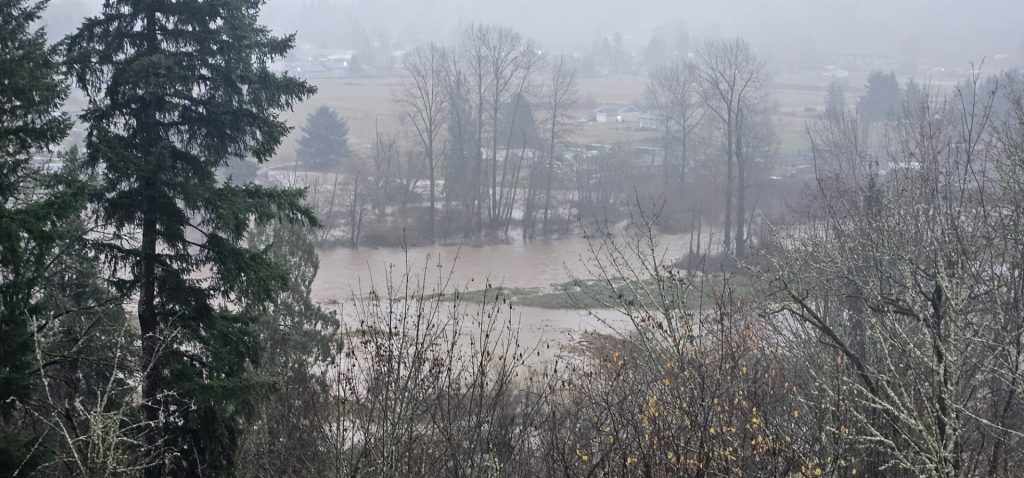
“Monitoring is a big part of stewarding the 17,000 acres in our care,” Dan says.
“That means getting our feet on the ground and assessing what changes on the landscape over time.” Because Stubbs sits on a floodplain, tracking the natural shifts – water flow, erosion, and changes in the river’s bends – is an ongoing responsibility. It’s also important to document for Pierce County when the handover takes place.
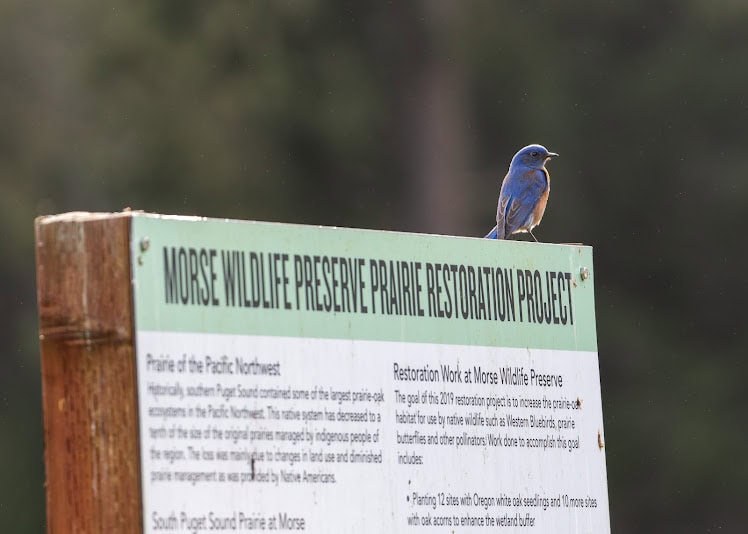
Morse Wildlife Preserve comes with a different set of priorities. Morse is unique in that it contains all three major Washington landscape types: wetland, upland forest, and prairie. The prairie brings the challenge of invasive reed canary grass, which requires seasonal, selective mowing. Forterra hires a specialized contractor for that work.
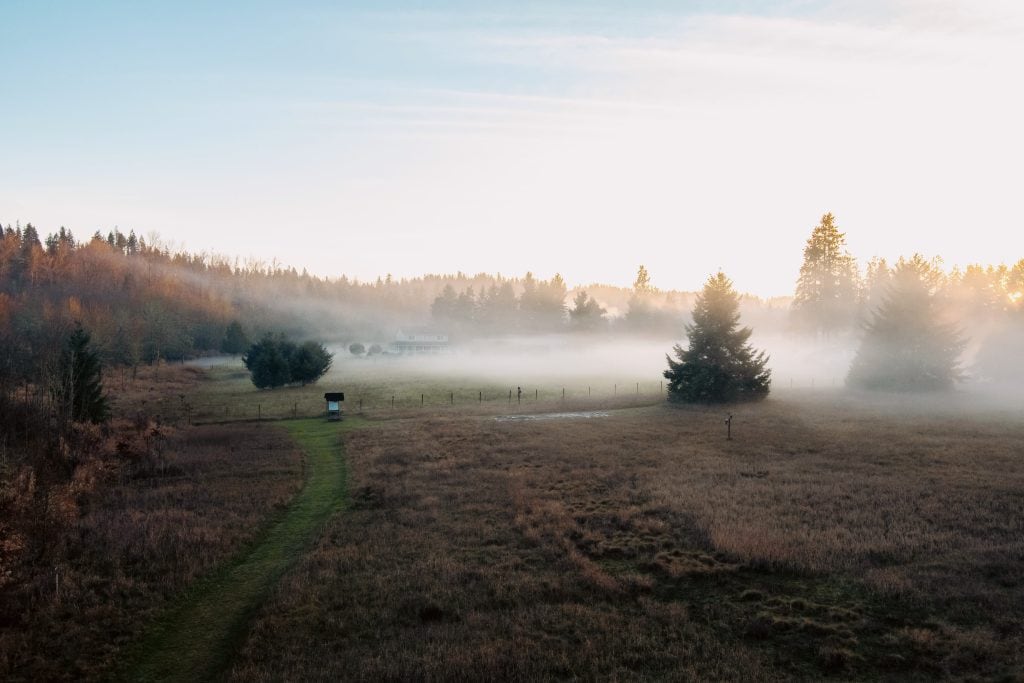
Morse also includes two buildings that require expensive upkeep: a cottage for the preserve’s two caretakers – a couple who live on the property full time – and an historic barn. Meanwhile, the wetlands require year-round boardwalk repairs, making lumber and supplies a constant need.
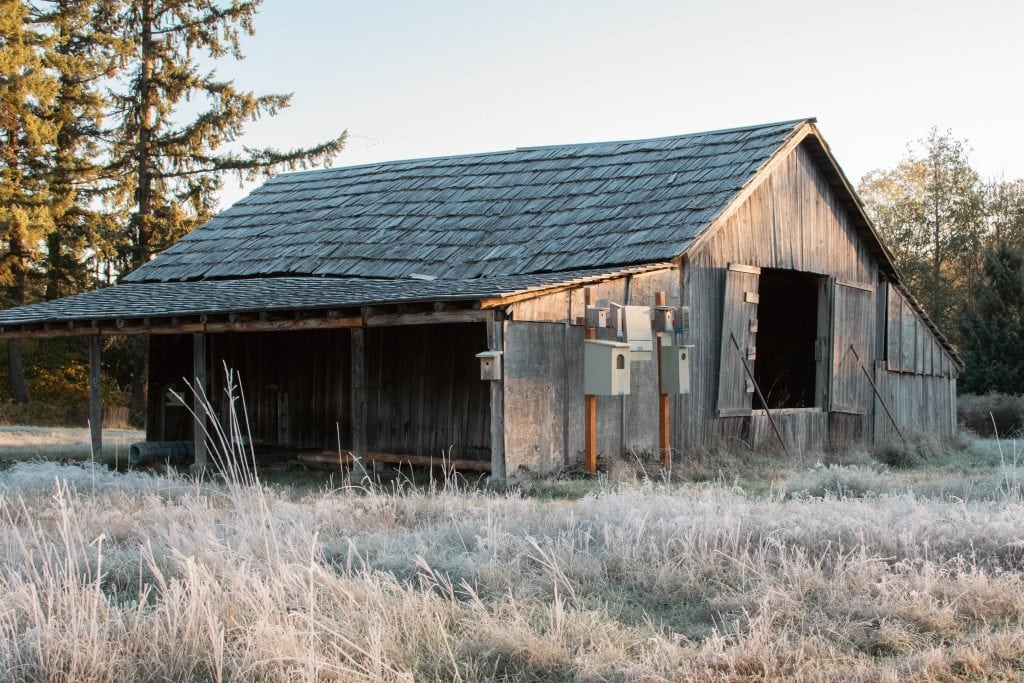
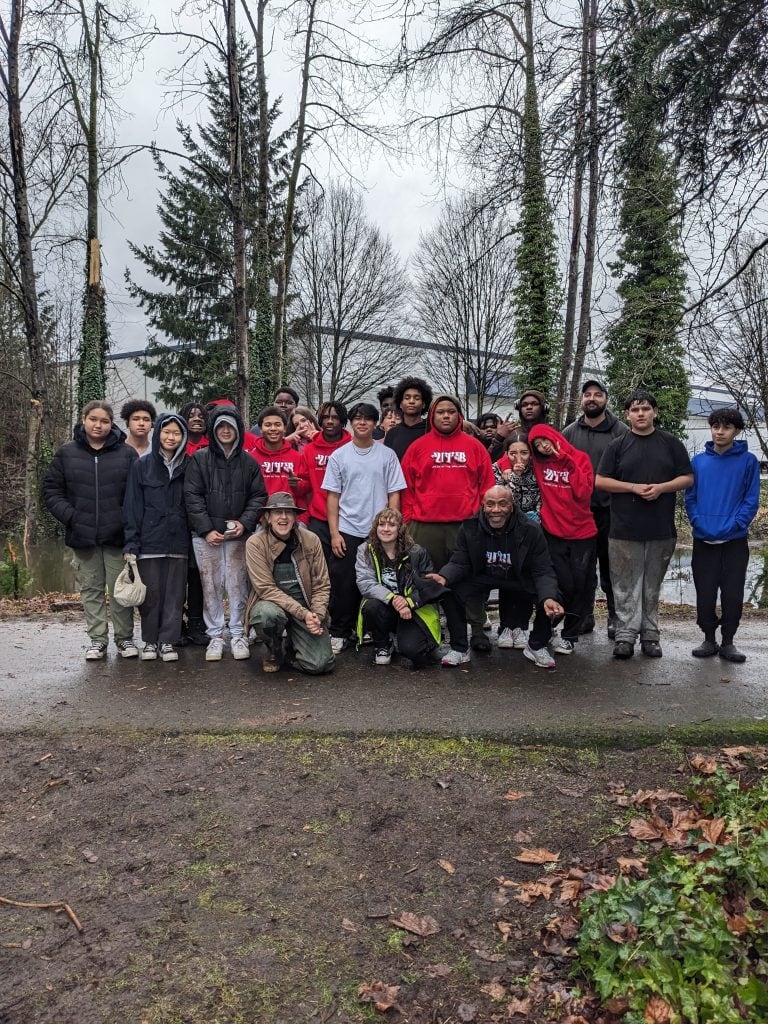
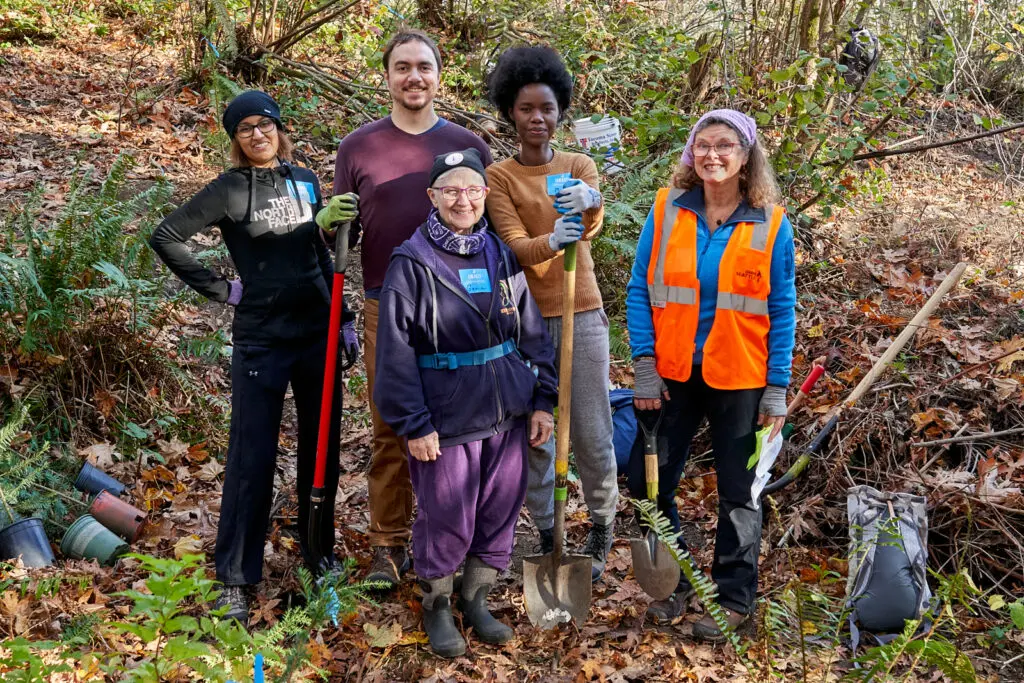
Dan says one of the greatest assets in stewardship is a strong volunteer team, and at Morse, Forterra is fortunate to have a small army of about ten – wittily named the “Morse Force.” Most are retired, some are naturalists, and all bring deep environmental knowledge to the work. “It’s unique, there’s nothing else like it at Forterra,” Dan says. The group has been going for thirty years. They help repair boardwalks, plant native grasses, and maintain bird boxes for the migratory birds that pass through the preserve.
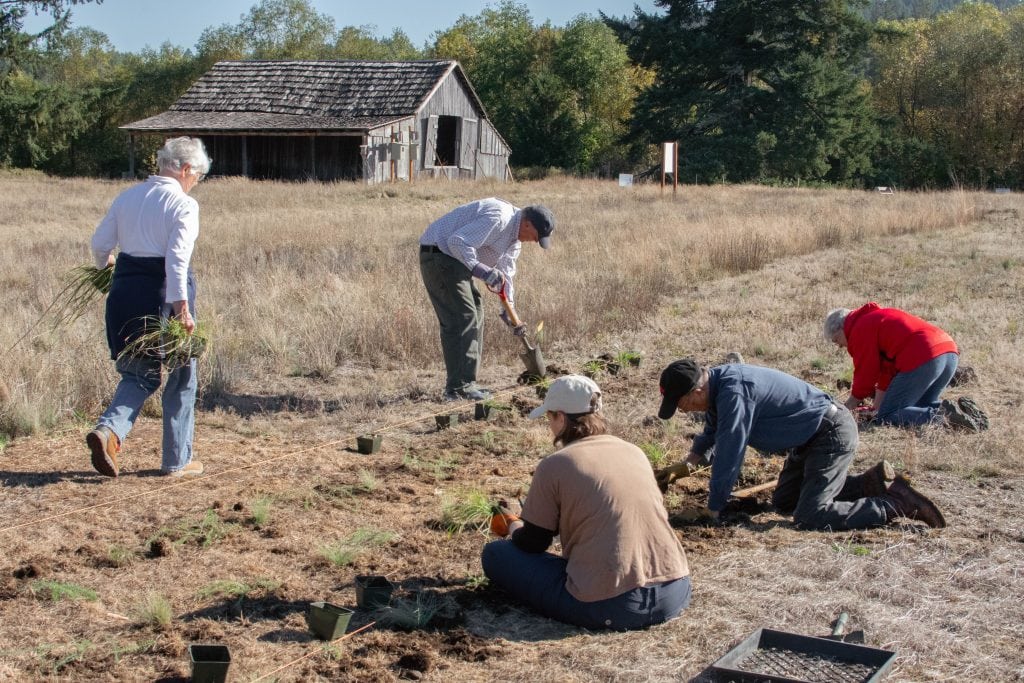
Dan acknowledges that it can be hard for people to grasp how much behind-the-scenes work stewardship requires – and that acquiring a property is only the beginning of the journey, not the end. “The value of conserving properties under threat is easy for donors to understand,” Dan remarks. But donor support also makes possible the day-to-day work that ensures healthy conservation: responding to invasive species, monitoring sites several times a year, purchasing aerial monitoring photos to track changes, conducting restoration feasibility studies, researching and applying for grants, consulting other experts, and hiring contractors when needed. “Everything is an ongoing project,” Dan says. “It doesn’t stop with an acquisition. It goes on and on.”
Dan reflects that when we gaze out across Puget Sound, or stand in an old cedar forest we feel connection and reverence for the landscape, but we can’t assume these landscapes are safe – twenty years from now, that same place could be quietly degraded under the weight of constant pressure – unless someone is watching, responding, and caring for it.
“We’ve made the commitment to steward these 17,000 acres – to monitor them and care for them in perpetuity,” Dan says. “We don’t do that on our own as Forterra. We do it with sponsors, partnerships, other agencies, and Indigenous Tribes. We’ve gotten very good at it, honestly – but it’s a struggle. It’s hard to fund. And the work is absolutely essential… and wonderfully satisfying.”